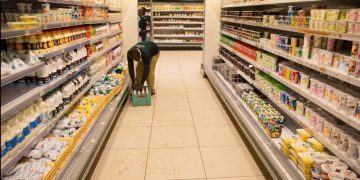
The bottled water, energy drinks and sparkling soft drinks categories are three distinctively different categories which have all suffered very different impacts as a result of the Covid-19 lockdown.
Bottled Water
The bottled water category has traditionally seen consistent growth with annual volume growth of 7% between 2014 and 2018. However, between 2018 and 2019 the category lost 4.8% in volume primarily due to the fact that the excess volumes needed for drought relief were no longer required. In this same period, however, the category value increased by 2.8% as a result of price increases and a shift to smaller pack sizes that cost more per litre.
The Covid-19 lockdown exacerbated the volume decline in bottled water sales. Bottled water typically does experience seasonal shifts as a result of the cooler weather so a decline between the first and second quarter of any given year is to be expected.
This year, however, the decline was significantly more marked with the second quarter of 2020 experiencing a 25% loss compared to the second quarter of 2019. The reason for this large decline is due to the fact that most consumers were at home in lockdown, during which time tap water became a real competitor to bottled water.
A large proportion of bottled water consumption is occasional and consumed out of home. Food services, including restaurants, have traditionally represented around 15% of bottled water’s share of market. Most consumers don’t typically consume bottled purchased water at home which was a contributing factor to this sector’s large decline.
The one exception to this decline was larger bottled water pack sizes with sales of 5 litre packs remaining relatively consistent. These larger pack sizes are typically consumed by those with no access to clean drinking water. Larger pack sizes, however, form a relatively small percentage of the market. Similarly, 2 litre and 1.5 litre pack sizes – both of which tend to rely on food services – experienced significant declines.
Overall, the bottled water category is expected to continue to lose volume as the food service industry remains under pressure and as the economy continues to be constrained as a result of the extended Covid-19 lockdown.
RTD Energy Drinks
Energy drinks have traditionally been upmarket, premium priced products, typically coming in metal cans aimed at the clubbing and extreme sport market. The category has enjoyed double digit growth since its establishment in South Africa. Between 2018 and 2019 RTD energy drinks were the fastest growing beverage category in the market in volume terms, increasing by 21.5%.
The entrance of new players offering lower value products in larger plastic pack sizes has expanded the energy drinks market and increased the number of retail outlets where these products are sold. Increased competition has meant that, while the category has continued to grow, prices have come down as the market becomes more saturated. At the same time local players have started to offer energy drinks in more affordable plastic packaging which allowed the category to expand into lower end retail as well as schools.
Sparkling Soft Drinks
The sparkling soft drinks category is the largest non-alcoholic beverage category and any volume or value movement has an impact on the entire non-alcoholic beverage category. As a result of the size of this category, significant volume growth is hard to achieve.
The category has traditionally enjoyed stable growth in both volume and value. It increased its volume by 4.5% between 2018 and 2019 largely as a result of promotional activities. The introduction of the sugar tax in 2018, however, did negatively impact this category which saw a low 0.1% increase from 2017 to 2018.
The Covid-19 lockdown resulted in a sharp 11% decline in this category in the second quarter of 2020 despite a local manufacturing base, well developed channels and a good spread of outlets. The biggest losses were experienced in smaller pack sizes of 300ml to 380ml and 400ml to 480ml. On the other hand, 2 litre pack sizes lost only 2%. This was the result of a consumer shift towards larger – and cheaper – pack sizes during the lockdown.
Not surprisingly, cans and glass packs took a bigger knock than plastic which is more cost effective. Cans are not expected to recover for some time. Food services have traditionally been an important channel for cans and glass.
As a result of the lockdown and consequent slowdown in sales, a number of sparking soft drinks brands stopped their advertising. Coca-Cola, for example, paused all advertising from April and only kicked off with a new campaign in the UK and Europe at the end of July with a new payoff line, “A better normal’.
The impact of this category’s decline has had a negative impact on the packaging industry given that beverages form a large part of its business.
The big question is whether these consumer behaviour shifts are here to stay or not. For as long as the work from home trend continues, it is likely that many people will continue to remain relatively insular, staying in rather than going out after work. Disposable income too needs to be factored in given that affordability has become an issue.

Author: PackagingNews Africa
.